
Finney County Release Feed Status
No exact official Finney County 24-hour release list was verified. The Finney County Sheriff jail roster reports people whom the sheriff currently holds. It is updated regularly during the day, but the sheriff does not publish an exact refresh interval. When a person leaves custody, the entry drops from the current view. The site does not state how long any post-release data remains online because the roster is not a historical release archive.
A missing card can suggest that the person is no longer held at Finney County Jail, but it does not show whether the person posted bond, completed a sentence, received a court-ordered release, moved to KDOC, or transferred under another hold. Jail staff route past-incarceration questions to Sheriff Records. A confirmed same-day list therefore comes from release or disposition records, not from comparing roster snapshots.
Check Finney County Same-Day Releases
Use a short fallback chain rather than trying to filter the live roster into a feed it does not provide. Sheriff Records is the local source for prior confinement and release history. The records office is at 304 North Ninth Street in Garden City, and its published telephone number is (620) 272-3756. Research did not verify a fixed fee, turnaround, or online retention period, so ask the office what is available before sending payment or assuming an immediate response.
- Note the full name and, if known, the booking number.
- Check the current sheriff roster. A listed person remains in reported county custody.
- Ask Sheriff Records for the release or disposition covering the exact 24-hour date range.
- Compare a bond or judge-ordered event with the court case.
- For a transfer, check KDOC, another jail, federal custody, or immigration custody as appropriate.
For a named-person search across those systems, use the Finney County released-inmate search on the home page. A date-range request serves a different purpose: it asks Records which release or disposition events occurred during one day.
Finney County Roster Fields
The online roster has useful identification fields, but none is a verified same-day release field. Saving the booking number while an entry is current can make a later Records request more precise. Do not infer a release time by noting when a card disappears.
| Verified roster field | What it can establish |
|---|---|
| Name and booking number | Identifies the current Finney County Jail booking. |
| Charges and bond | Shows allegations and bond displayed for current custody, not the final case result. |
| Arresting agency | Names the agency tied to the booking. |
| Booking date and time | Shows entry into booking, not departure. |
| Age, sex, race, image | Helps distinguish current entries when available. |
The official roster source shows how the search controls and booking fields are arranged:
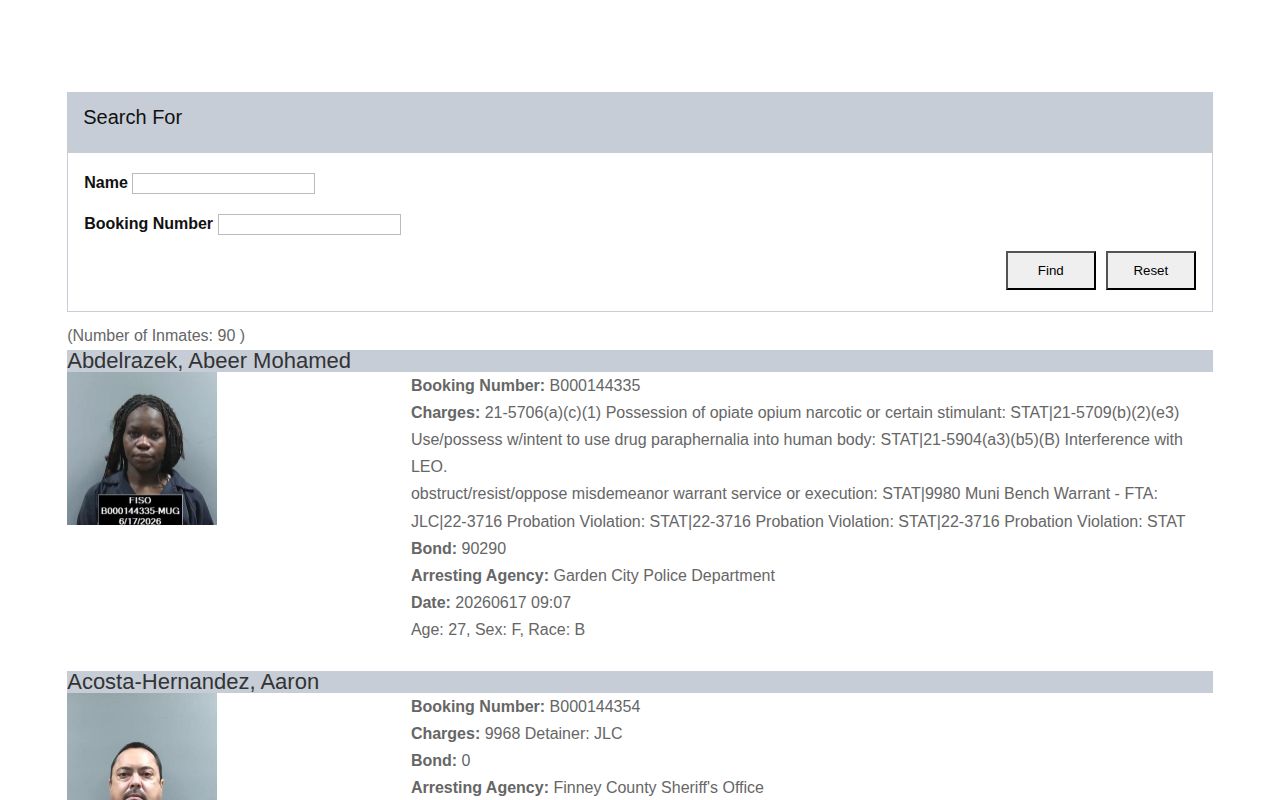
The screen is a current-custody tool. A proper release record must separately identify the actual disposition, release time when recorded, and whether another authority received the person.
Finney County Release Fallbacks
Different systems answer different questions. Kansas VINE can search and send custody-change notices for county-jail records. A VINE notice may concern release, transfer, or escape, so check it against Sheriff Records. Kansas VINE does not cover KDOC prisons. If a Finney County detainee transferred to state corrections, use the KDOC KASPER offender search and confirm the displayed status with KDOC.
Court records can show an order, bond action, dismissal, sentence, or other case event. They do not prove the moment jail custody ended. A warrant record is not a release record. For federal custody, use the Bureau of Prisons locator when applicable. An immigration detainer may cause transfer rather than return to the community. For a wider records request, see 72-Hour Releases.
Finney Release Versus Custody
“Released” means the jail's custody event ended. It does not always mean freedom from every hold or sentence. A person may leave after cash or surety bond, time served, a court order, sentence completion, transfer, or another disposition. “Discharge” can mean the end of a sentence or supervision duty. A transfer ends one agency's custody while another begins custody.
| Observed fact | Best next source |
|---|---|
| On live jail roster | Finney County Jail |
| Missing from roster | Sheriff Records |
| State-prison transfer | KDOC KASPER and KDOC records |
| Bond or court order | Court case plus actual jail release record |
| VINE alert | Sheriff Records or receiving agency |
These checks prevent a move between agencies from being reported as release to the community. They also separate a booking allegation from the later court result.
Finney County Bond Releases
Finney County publishes specific bond-taking rules. Jail staff cannot recommend a bondsman. A full cash bond may be paid by certified cashier's check, money order, or exact cash payable to the Finney County Sheriff's Office. The court may apply posted cash toward costs or fines. Verify the current amount, accepted form, and any other hold directly with the jail.
A bond release ends the jail hold for that case, subject to other holds. It is not a dismissal, acquittal, or sentence discharge. The court case remains the source for later hearings and final disposition. If the roster entry vanishes after bond is posted, ask Sheriff Records for the actual release event instead of assigning a time from the website change.
Cash-bond payment details do not show when release processing finishes. Staff must still check the case, payment, identity, and any other hold that may prevent departure. The sheriff does not publish a standard release-processing time. Someone reconnecting with a person after bond should wait for direct confirmation instead of treating payment, a court order, or roster absence as the completed release.
Why Finney Releases Vanish
The sheriff's Jail Division says the roster is updated regularly and that an absent person probably is not in its custody. The same official route sends historical questions to Records. This local archive gap is why an honest 24-hour list cannot be reconstructed from screenshots or daily card comparisons.
The Jail Division source visually documents that current-custody and Records split:
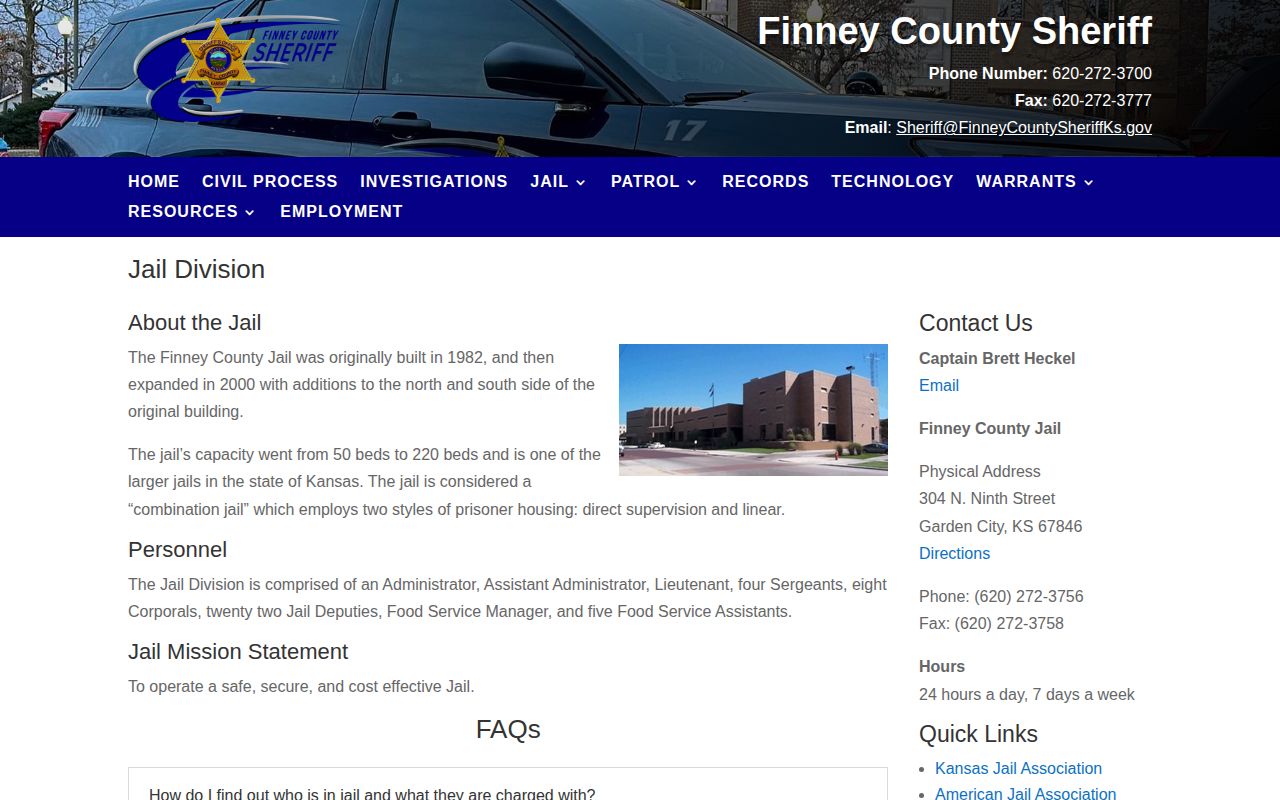
The image reinforces the limit. Disappearance is a lead, while a release or disposition record supplies the verified event. Do not scrape cards and call the differences releases. A card can disappear after transfer or data change.
Keep the date range tied to local time and identify whether the request seeks every disposition or only confirmed releases to the community. A transfer record may be essential even though it does not belong in a community-release count. When the response uses an unfamiliar code, ask Records to define it rather than guessing. Save the office response, the booking number, and the date it was supplied. Those details make later court or receiving-agency checks much easier.
No official Finney sheriff recent-release mobile app was verified. VINEMobile can provide Kansas VINE notices, but it is not a county release gallery and cannot fill the roster's archive gap. The same rule applies to a current booking photo. Its disappearance says nothing by itself about the legal reason for departure.
Word a Finney Release Request
A focused request helps Sheriff Records identify the proper material without asking staff to create a feed that does not exist. State that the request concerns release or disposition events at Finney County Jail during an exact 24-hour period. Give the date, start time, end time, and local time zone. For a single booking, add the person's full name and booking number. Ask whether the record shows actual release time, disposition type, and a receiving agency.
Kansas open-records rules allow agencies to apply exemptions and reasonable fees, but the research did not verify a preset Finney fee or response estimate for this record. Request an estimate if cost may apply. Records can also explain whether a field is held, withheld, or unavailable. Do not ask the office to infer a community release from a roster change.
Match Finney Release Court Events
A court docket can explain why release became legally possible. It may show a bond change, dismissal, sentence, or filed order. Yet the court event and physical jail departure are separate facts. Another hold can keep the person in custody, and a transfer can follow the end of the local case. Match the court case number to the booking and then confirm the jail disposition.
Use the same care with charges shown on the roster. They describe the booking record and should not be restated as a final judgment. The later court outcome controls that question. This two-source check is especially useful when a same-day inquiry falls between a court action and the sheriff's next roster update.