
Finney Parole Versus Probation
Probation, community corrections, parole, and postrelease supervision describe different legal relationships. Finney County probation or community corrections follows a court sentence. It can occur without a state prison stay. Parole generally concerns release authority for an eligible older or indeterminate Kansas prison sentence. Postrelease supervision follows the prison portion of many determinate sentences. A determinate sentence has a set length. An indeterminate sentence has a minimum and maximum and may require a parole decision.
The sentencing order and Kansas Department of Corrections record should control the label. The live jail roster cannot answer this question after someone leaves local custody. Nor should an office name be treated as proof without matching an identifying number or filed order.
| Status | Source of authority | Finney County verification route |
|---|---|---|
| Probation | District court sentence | Court file and assigned court-services office |
| Community corrections | Court assignment to an intensive local program | 25th Judicial District Community Corrections and court order |
| Parole | Release decision for an eligible KDOC sentence | KASPER, Prisoner Review Board record, and KDOC parole office |
| Postrelease supervision | Community portion of a determinate prison sentence | KASPER, sentence record, and KDOC Community and Field Services |
- Discharge
- The formal end of a sentence or supervision obligation.
- Absconder
- An agency status for a supervised person whose location or compliance is unresolved. A warrant alone does not prove this label.
- Detainer
- A hold or notice from another authority that may affect where a person goes after release.
Check Finney Post-Release Supervision
Start with the legal path, not a guess based on a jail exit. A county booking may end in bond, time served, probation, transfer to KDOC, or another agency hold. State supervision becomes relevant only when the person has a KDOC-connected sentence or placement. The KASPER offender search is the statewide route for that population. Match the KDOC number where possible, read the exact status, and note the record's update warning.
- Check the Finney court case for the judgment, sentence, and any later order.
- If the person entered state corrections, search KASPER and match more than the name.
- Record the exact supervision or custody label without changing its meaning.
- Use the official KDOC directory to identify the listed field office.
- For a court-assigned local program, contact Community Corrections about process, while respecting protected client details.
- Request the discharge or supervision record from the proper custodian when the public entry is unclear.
The KASPER scope and daily-update notice explains why a result should be checked with KDOC. Its state record is not a substitute for the Finney court file. Conversely, a local court order does not establish that KDOC supervision ended.
The official KASPER source shows the search route and cautions that its information has limits.
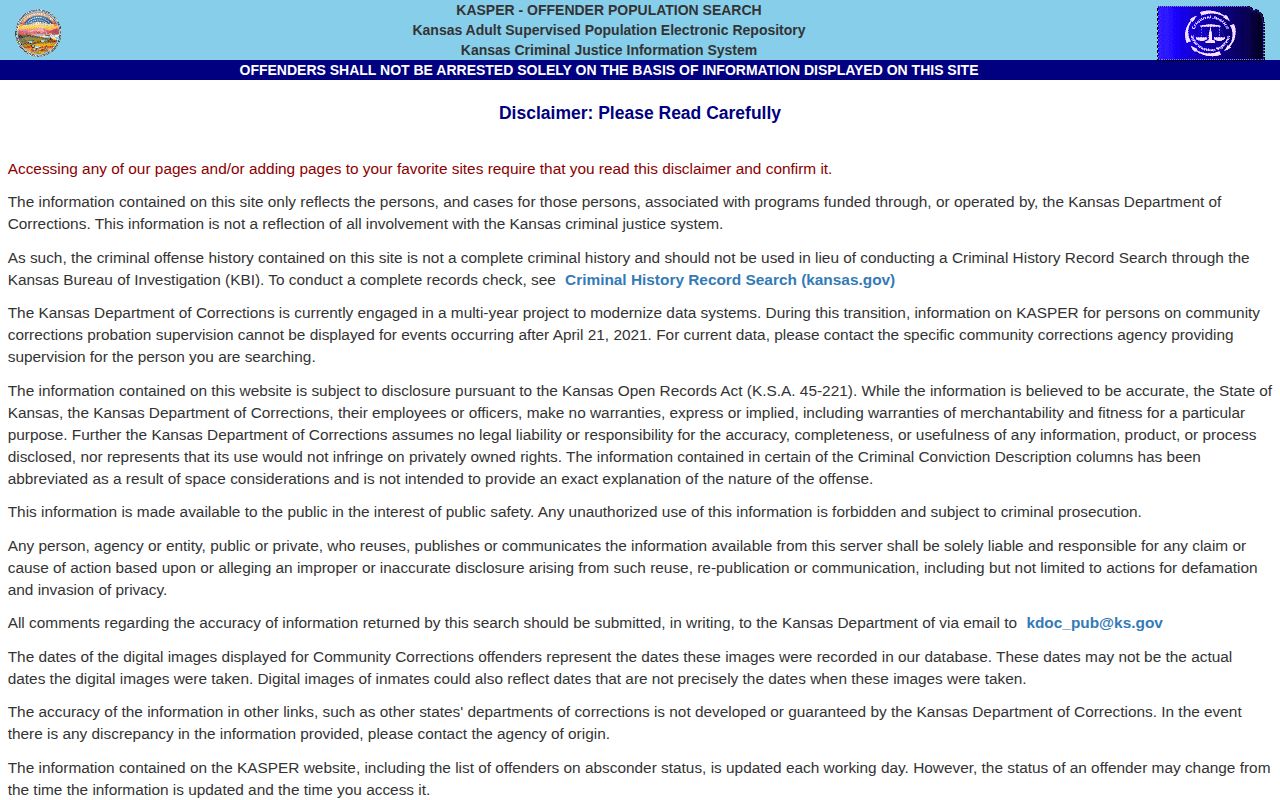
That warning supports matching the live status with the sentence record and responsible office before treating it as current.
Finney State Supervision Office
KDOC lists the Garden City Parole Office in its South Region. It covers Finney County and several surrounding counties. The office handles state parole and postrelease matters, not a local probation sentence. The official parole-services directory is the best source for current office routing.
Garden City Parole Office816 N. Campus Drive, Suite 500
Garden City, KS 67846
(620) 960-1275
South Region
The state directory image identifies the Garden City office used for Finney County state supervision.
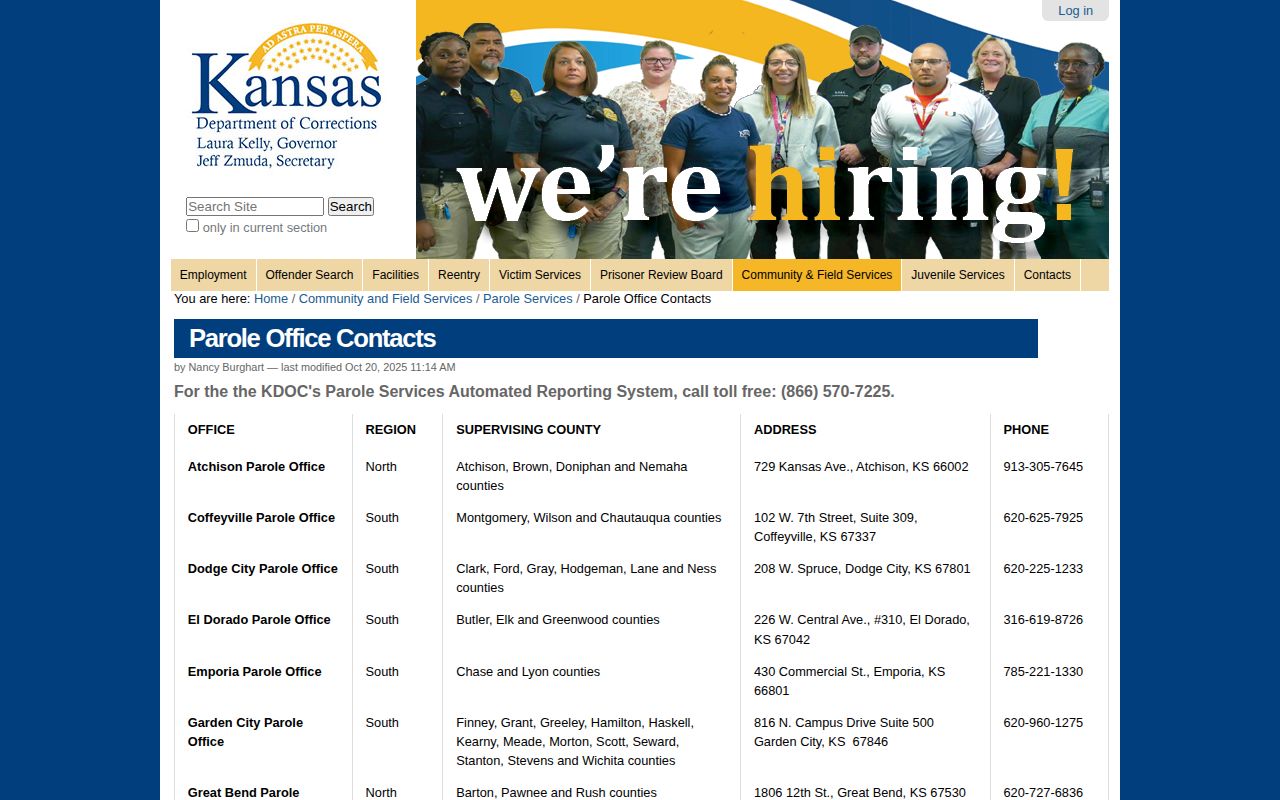
Use the directory to confirm office coverage, then rely on the matched KDOC record for the individual's status. KDOC also publishes its Parole Services Automated Reporting System at (866) 570-7225. Do not publish a person's private reporting schedule or specific conditions.
Office coverage is broader than residence. A state record may point to Garden City because that office serves the assigned area, while the original conviction, prison, and planned residence lie elsewhere. Confirm identity through the KDOC number and case information. If KASPER shows an office that differs from the expected one, use the live entry and current directory instead of assuming the record is wrong. Transfers between field offices can occur during a supervision term.
General office contact can confirm where records or process questions should go. It should not be used to seek confidential details about meetings, treatment, travel, or safety plans. A public status check needs only the lawful record necessary to identify the supervision type, responsible authority, start or release event, and formal end.
Finney Community Corrections Region
The 25th Judicial District Community Corrections office is a separate court-supervision route. It administers grant-based adult programs for Finney, Greeley, Hamilton, Kearny, Scott, and Wichita Counties. That six-county structure matters. A Garden City office address does not mean every client has a Finney County case, and a Community Corrections assignment is not KDOC parole.
25th Judicial District Community Corrections607 W. Santa Fe Street
Garden City, KS 67846
(620) 271-6200
Fax: (620) 277-7891
Monday through Friday, 8 a.m. to 5 p.m.
The county's office page shows its regional coverage and weekday hours.
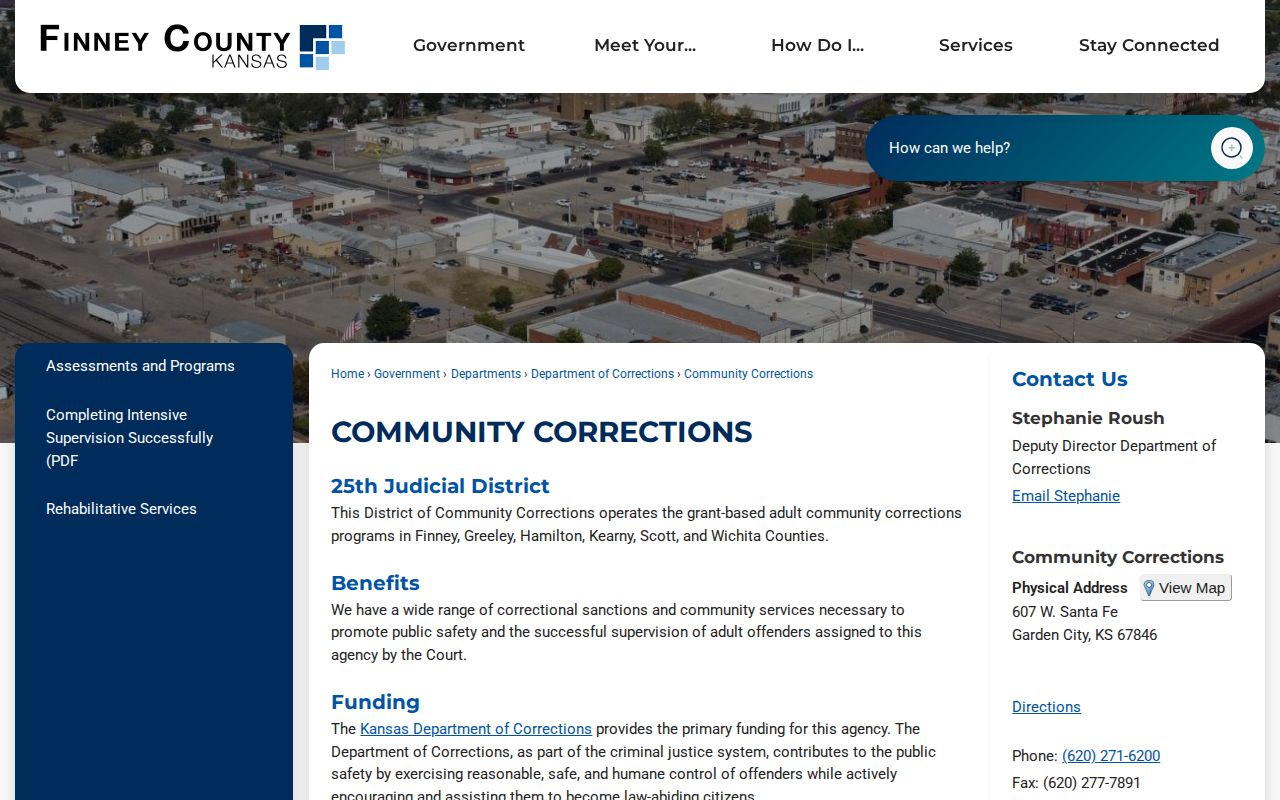
The image confirms a local contact path. It does not create a public client lookup or authorize disclosure of protected case information.
A local case chronology should begin with the filed sentencing order. That document may identify probation, court services, or Community Corrections and may later be followed by a modification, revocation, or discharge. Match those entries with the clerk's record. The office's regional role describes program administration, while the court record supplies the authority for one person's placement.
Finney Warrants After Release
Finney County maintains an official warrant search with name, warrant number, charges, bond, date, age, sex, and race. It can reveal an unresolved local matter after release. Still, a warrant entry is not a custody record. It does not show that the person has been arrested, establish a current jail location, or prove an absconder finding by a supervision agency.
Match the warrant number to the sheriff or court record. If the wording suggests a supervision violation, confirm the status with the court or responsible supervision office. Kansas VINE covers county-jail custody changes, but it does not report KDOC prison or parole status.
The sheriff's warrant page provides fields and an important distinction from custody.
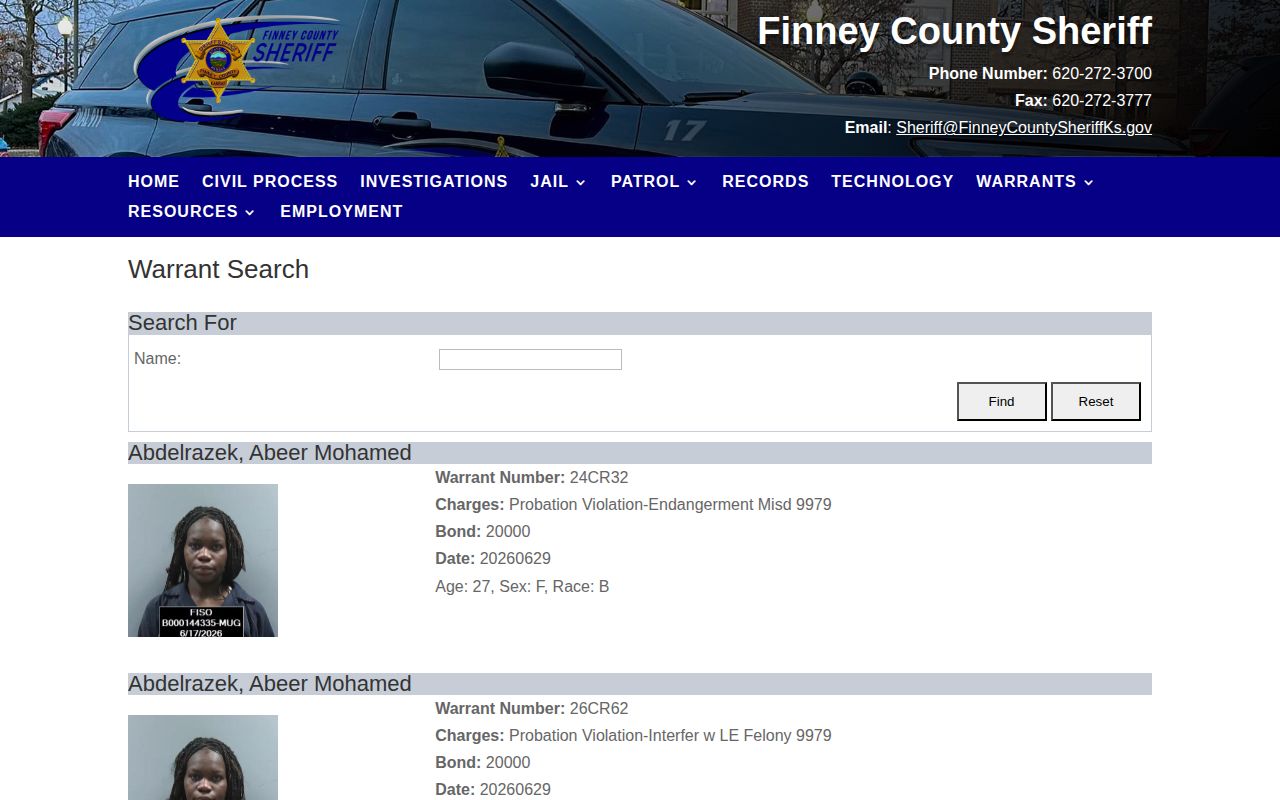
The displayed warrant data should prompt a focused official check, not a conclusion about current custody or release.
Note: A warrant can coexist with release from an earlier booking, so record each event and authority separately.
Finney Release Property and Funds
Release logistics can be mistaken for proof of supervision. The Finney County Jail rules permit an incarcerated person to release property only once, with the recipient selected by that person. Pickup requires photo identification. Property left by someone sentenced to prison, or otherwise left behind, is destroyed after 30 days under the published rule.
Remaining trust funds are returned at release by debit card or check. Those actions help close out a jail stay, yet neither one identifies parole, probation, or discharge. A relative may receive property before the person leaves. Funds may be returned at a local exit even if another agency hold changes the destination. Use the release disposition, court order, and supervision record for status.
If someone expects property or funds after a transfer to state prison, ask the jail which transaction was recorded and which agency now holds the person. The 30-day property rule makes prompt contact useful. Still, no one should infer a community placement merely because property was collected. Property, money, physical custody, and legal supervision are separate parts of the timeline.
Finney Supervision Discharge Records
Supervision ends through a formal record, not merely with the passage of an estimated date. For local probation or community corrections, check the court docket for discharge, termination, revocation, or a later sentence order. For KDOC parole or postrelease, search the current KASPER entry and request the state supervision or discharge record when needed. K.S.A. 22-3722 addresses Kansas discharge provisions, but the case-specific document remains essential.
Kansas open-records rules allow a focused request for existing releasable records. A denial or redaction may apply to protected details. The request should name the person with enough identifiers, state the relevant case or KDOC number, and ask for the status and effective date. Do not ask one office to certify another agency's record.
A useful request distinguishes release from discharge. For state supervision, ask for the prison release event, supervision type and start date, and later discharge record if one exists. For a local court placement, ask the clerk for the sentencing order and the docket entry that ended or changed supervision. An office may redact protected details while still identifying the order, status, and effective date that answer the custody question.
For a full custody timeline, compare the local release history on Finney County released inmates with the filed court and KDOC records. A confirmed end date should carry its exact label: probation discharge, parole discharge, postrelease end, or sentence discharge.
Keep the case number, KDOC number, and booking number with their respective records. That prevents a similar name from joining unrelated events into one supervision history.